
Night Driving Tips for Learners in Melbourne: A Safety Guide
Book Your Lesson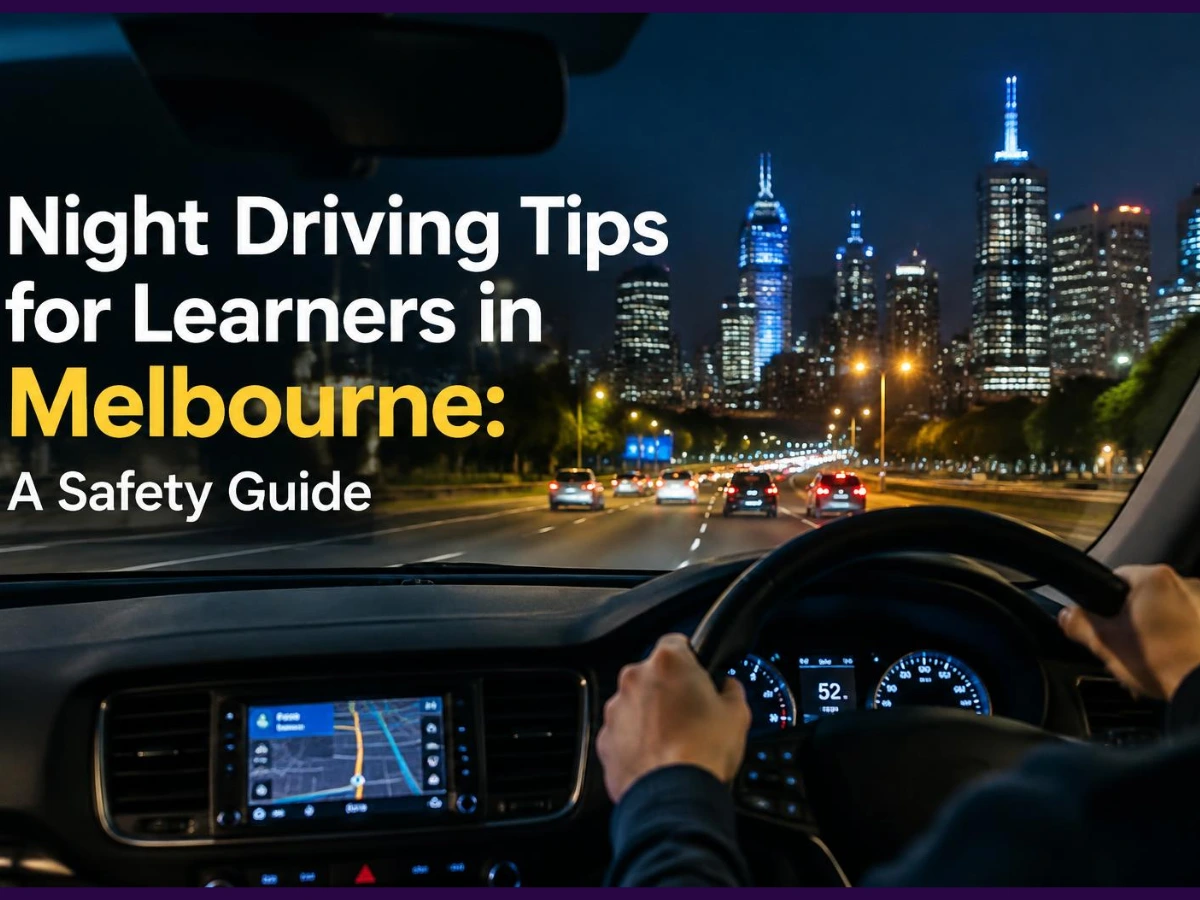
Summarize this post
Driving after dark feels like a different skill. Distances are harder to judge, oncoming headlights glare in your eyes, and a road that felt easy at 3 pm can suddenly seem darker and busier.
If you’re learning in Victoria, you can’t avoid it. Learners under 21 need at least 20 hours of night driving as part of their 120 supervised hours to ensure they can drive safely at night.
The short answer: to drive at night safely as a learner, start on quiet, familiar streets, keep your windscreen and lights clean, dip your high beam for other traffic, slow down so you can stop within the distance you can see, and take a break before you get tired. Build up gradually, always with a supervising driver or instructor, focusing on safe driving practices.
Here’s how to get comfortable behind the wheel after dark.
How many night driving hours do learners need in Victoria?
If you’re under 21, you need at least 120 hours of supervised driving, including at least 20 hours at night, before you can sit the drive test.
A few safety tips worth knowing include checking your mirrors frequently.
- How night hours are counted: The myLearners app records night time hours using sunrise and sunset times each day. VicRoads also says night driving must be in dark conditions, when headlights are needed to drive safely.
- 20 hours is the minimum: VicRoads encourages learners to get as many night hours as they can, so they’re ready to drive alone.
- Over 21? You don’t have to complete the 120 hours, but night practice is still a smart idea.
Want help keeping track? Our guide on how to log 120 hours in Melbourne walks through it, and L plates to P plates in Victoria explains where night hours fit in the bigger picture.
Why is night driving harder for learners?
It’s not just “darker”. Several things change at once:
- Less visibility: You see less of the road ahead, and hazards appear later.
- Glare: Oncoming headlights, and lights from vehicles behind you, can briefly dazzle you.
- Harder to judge distance and speed: Everything looks different in the dark, especially on unfamiliar roads.
- Hard-to-spot road users: Pedestrians and cyclists in dark clothing are much harder to see.
- Tiredness: Concentration drops faster late in the day.
Experienced drivers adjust without thinking. Learners are still building that skill, which is why practice matters.
Night driving tips for learners
1. Start at dusk, not midnight
Don’t make your first night drive a late one. Begin at dusk on a quiet street you already know, so your eyes and your confidence adjust together.
2. Check your lights and glass before you go
Check that your headlights, tail lights and indicators work. Then clean the windscreen and mirrors, inside and out. Dirty or fogged glass scatters light and makes glare much worse.
3. Use your headlights properly
Turn them on as the light fades, not after it’s already dark. Use high beam only on roads with no other traffic, and dip it as soon as you approach an oncoming vehicle or come up behind another car, so you don’t dazzle other drivers.
4. Drive to what you can see
Your headlights only light up so much road. If you couldn’t stop within the distance you can see, you’re going too fast. Slow down on unlit roads, bends and unfamiliar streets.
5. Manage glare from oncoming lights
Don’t stare straight into oncoming headlights. Glance towards the left edge of your lane to keep your position, and ease off the accelerator for a moment if you’re dazzled. If lights from behind are bothering you, switch your rear-view mirror to its night setting.
6. Leave a bigger following gap
Everything takes longer to notice at night. Extra space gives you more time to react and brake smoothly.
7. Scan for people, bikes and animals
Look well ahead and to the sides, especially near crossings, bus stops and shopping strips. On the edges of the suburbs and on country-style roads, watch for wildlife as well.
8. Keep the cabin calm
Dim the dashboard if it’s bright, because bright screens make it harder for your eyes to adjust to the dark. Keep conversation and music low so you can concentrate.
9. Watch for tiredness, yours and your supervisor’s
Yawning, heavy eyelids and drifting attention are signs to stop. Start with short drives, and swap or take a break before anyone is exhausted.
10. Add the tricky stuff gradually
Once you feel comfortable on quiet streets, move on to main roads, roundabouts and busier intersections after dark. Save freeways and long drives for when your confidence is solid.
What’s the best way to build up your night driving hours?
A gradual plan works better than cramming:
- Quiet local streets at dusk: Get used to the changing light.
- Familiar routes after dark: Drive roads you already know well.
- Main roads and roundabouts: Add more traffic and more complex decisions.
- Night driving in the rain: VicRoads encourages supervisors to give learners night practice in rainy and windy weather too. Our wet weather driving tips for Melbourne learners will help you prepare.
- Longer drives: Once you’re confident, try longer or faster trips with your supervisor.
In winter, the sun sets early, so it’s easier to fit night hours into a normal evening. Log every drive in the myLearners app or your official log book.
Tips for supervising drivers at night
If you’re a parent or friend supervising a learner after dark:
- Stay calm: Nervous passengers make nervous drivers.
- Give directions early: “Left at the next street” works better than a last-second “turn here!”
- Check your own tiredness: A sleepy supervisor can’t coach well.
- Keep early sessions short: Quality matters more than length.
- Talk it through afterwards: Ask how it felt before you give feedback.
What should you check before a night drive?
- Headlights, tail lights and indicators all work
- Windscreen and mirrors are clean
- Fuel and drinking water are sorted
- L plates are displayed and your learner permit is with you
- The myLearners app or log book is ready
- Both of you are rested and alert
- You’ve planned a route that suits your confidence
How can a driving instructor help with night driving?
At Licence Pass, lessons are taught by VicRoads-accredited instructors in an automatic dual-control car. Your instructor can show you how to cope with glare, judge distance and manage space on the road, with dual controls for backup. That takes pressure off you and your supervisor.
If you’d like to practise in lower light, ask your instructor about lesson timing when you book.
If the thought of driving in the dark makes you anxious, Licence Pass’s nervous driver lessons and anxious driver lessons are taught at a slower, calmer pace. Our guide to driving lessons for anxious drivers in Melbourne has more advice.
Once your 120 hours are done, our guide to booking a VicRoads driving test covers what happens next, and driving test preparation lessons can help you get test-ready. Good observation skills help at night too, and our hazard perception test guide explains how to build them.
Ready to get comfortable after dark?
Night driving is a skill, and like any skill, it gets easier with calm, steady practice. If you’d like an experienced instructor beside you, book a driving lesson with Licence Pass or explore our driving lessons in Melbourne. We teach across Melbourne’s west, including Tarneit, Werribee, Truganina and more, and you can see every suburb on our service areas page.
On This Page
Related Topics
Ready to Pass Your Test? Book Your First Lesson Today
Ready to Pass Your Test? Book Your First Lesson Today
Why Choose Licence Pass for Driving Lessons in Melbourne?
Thousands of Melbourne learners trust Licence Pass for some of the most affordable, best-value driving lessons in the west without compromising on quality. Here’s what makes us a trusted driving school in Melbourne’s west.
Frequently Asked Questions
Get answers to common questions about driving lessons, bookings and test preparation in Melbourne.
No FAQs Available
Driving Tips, Road Rules & Learner Advice
Get practical driving tips, Victorian road rules, hazard perception advice and learner guidance to help you prepare for your licence test.
Night Driving Tips for Learners in Melbourne: A Safety Guide
Driving after dark feels like a different skill. Distances are harder to judge, oncoming headlights…
Best VicRoads Testing Locations Near Melbourne’s West (What to Expect)
Choosing the right driving test centre in Melbourne’s west can help you plan your test…
Converting an Overseas Licence to a Victorian Licence: Full Guide
You’ve landed in Melbourne, found a place to live, and now you’re wondering: can I…