
Wet Weather Driving Tips for Melbourne Learners
Book Your Lesson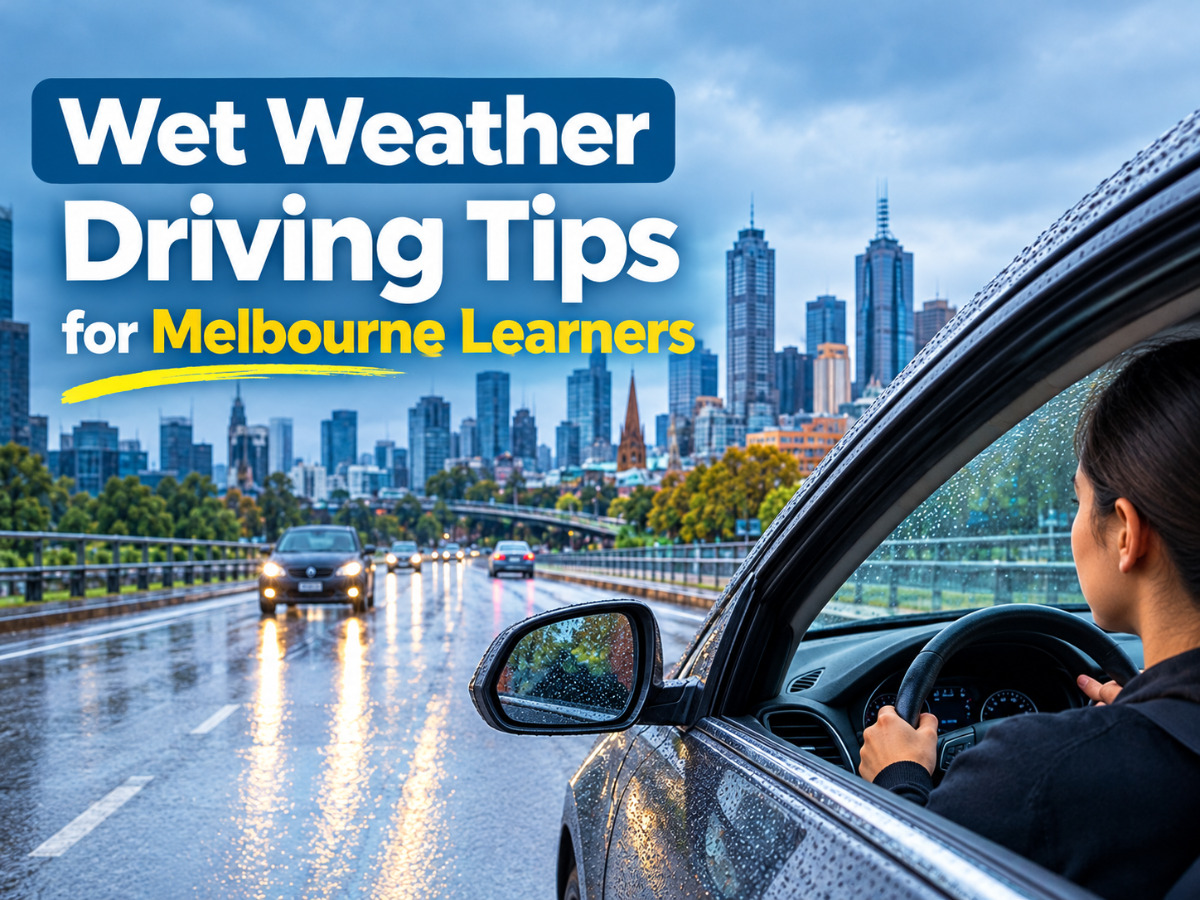
Summarize this post
Melbourne weather doesn’t ask permission. You can start a lesson in sunshine and finish it in a downpour, and that’s exactly why learning to drive in the wet matters.
To drive safely in wet weather, turn your headlights on, slow down, leave a bigger following gap, brake and steer smoothly, and never drive through floodwater. Wet roads are slipperier, spray reduces visibility, and everything takes longer, so every input needs to be gentler and earlier than usual.
Here’s what Melbourne learners should know, and how to build confidence in the rain without taking unnecessary risks.
Why is wet weather driving harder for learners in Melbourne?
Rain changes three things at once:
- Grip: Tyres have less traction on a wet surface, so braking and steering need more room and more care.
- Visibility: Rain, spray from other vehicles and fogged windows make it harder to spot hazards early.
- Other road users: Pedestrians with umbrellas and hoods, cyclists and motorcyclists are harder to see, and they may not see you either.
Experienced drivers adjust almost automatically. Learners are still building that instinct, which is why wet weather practice with an instructor or supervisor is so valuable.
Wet weather driving tips for learner drivers
1. Turn your headlights on
Headlights help you see and, just as importantly, help other drivers see you. RACV recommends headlights on in the rain, even in daylight. Make it a habit: wipers on, headlights on.
2. Slow down
Speed limits are maximums for good conditions, not targets. In the rain, drive to the conditions. If you can’t see far ahead or the road looks slick, slow down further.
3. Leave a bigger gap between you and the car in front
Leave more space between you and the car in front than you would in the dry. It gives you more time to react and more room to stop, and it keeps you out of the spray from the vehicle ahead. Tailgating is dangerous in any weather.
4. Brake early and gently
Sudden braking can cause skids on a wet surface. Look well ahead, ease off the accelerator sooner, and press the brake smoothly. The same goes for steering and accelerating: small, gradual movements.
5. Take extra care on tram tracks and painted lines
Melbourne has plenty of both. Tram tracks, road markings, manhole covers and metal surfaces can be especially slippery when wet. Cross tram tracks as straight as you safely can, and avoid braking or turning sharply on them.
6. Watch out for the first rain after a dry spell
Roads can feel greasy when rain follows a long dry period, because oil and dust build up on the surface. Expect less grip than you’d normally have and give yourself extra room.
7. Keep your windscreen clear
Use your wipers and, if the windows fog up, the demister and air conditioning. Good visibility is part of good control. Worn wiper blades are worth replacing before the wet season, not during it.
8. Don’t use hazard lights while driving
Hazard lights are for emergencies and breakdowns, not for driving through heavy rain. If conditions become too difficult, indicate and pull over somewhere safe until the rain eases.
9. Give other road users space
Slow down when passing pedestrians and cyclists so you don’t splash them, and allow extra room around motorcycles. Stay back from trucks and buses, which throw up a lot of spray.
How much longer does it take to stop in wet weather?
Stopping distance in wet weather is noticeably longer than in the dry, because tyres have less grip and the car takes longer to slow down. That’s why early, smooth braking and a bigger following gap matter so much.
There’s no single fixed number, because it depends on your speed, your tyres and the road surface. Treat your normal dry-weather stopping distance as the minimum and add extra room.
What is aquaplaning, and what should you do if your car aquaplanes?
Aquaplaning (or hydroplaning) happens when a layer of water builds up between the tyres and the road, so the car loses contact with the surface. When a car aquaplanes, the steering can suddenly feel light and the car may not respond to the wheel or the brakes. It’s most likely at higher speeds, with worn tyres, or where water has pooled on the road.
If it happens:
- Stay calm and don’t brake hard.
- Ease off the accelerator gently.
- Hold the steering wheel steady and keep pointing where you want to go.
- Wait for the tyres to grip again, then brake gently if you need to.
The best prevention is to slow down on wet roads, especially where water pools, and to keep your tyres in good condition.
Should you ever drive through flooded roads?
No. RACV’s golden rule is simple: if it’s flooded, forget it. Just 15 cm of flowing water, about the height of a house brick, can push a small car sideways, and floodwater often hides debris, potholes or washed-out road.
If you come to a flooded road:
- Turn around and find another route
- Never follow another car through the water
- Stay away from flooded creeks, drains and gutters
- Check the Bureau of Meteorology website or the VicEmergency app for warnings
How to drive in heavy rain: what learners should do
Heavy rain is the toughest test of your wet weather skills. Here’s what to do:
- Slow down well below the speed limit: Grip and visibility both drop quickly.
- Headlights on, wipers set so they clear the screen: Use the demister if the windows fog up.
- Leave a bigger gap and stay back from trucks and buses, which throw up a lot of spray.
- Avoid sudden braking, steering or acceleration.
- Don’t drive through floodwater.
- Pull over safely if you still can’t see the road, and wait for the rain to ease.
Learners should build up to heavy rain with an instructor or an experienced supervising driver, not on their own.
When should a learner avoid driving in the rain?
Learning in light to moderate rain is a great way to build skills. But there are times to wait it out:
- Severe weather warnings or flash flooding
- Rain so heavy that visibility is very poor
- Storms with strong winds and debris on the road
- Any time you feel overwhelmed and your supervisor agrees it’s best to stop
Starting small helps. Begin with quiet streets in light rain before moving to busier roads in heavier conditions.
How can learners practice driving in the rain?
It’s easy to avoid the rain as a learner, but you’ll need to drive in it eventually. A few smart ways to get ready:
- Practice with an instructor first: A dual-control car and an experienced instructor make your first wet drive far less stressful.
- Choose quiet roads: Start where traffic is light and speeds are low.
- Ask your supervisor to coach one thing at a time: For example, following distance on one drive and smooth braking on the next.
- Log wet drives: Variety matters for your 120 hours, and wet conditions are a useful part of it. Our guide on how to log 120 hours in Melbourne explains how to record them.
- Build your observation skills: Spotting hazards early is even more important in the rain, and our hazard perception test guide can help.
At Licence Pass, lessons run in an automatic dual-control car with a VicRoads-accredited instructor, so you can focus on steering, braking and observation rather than gears. If your confidence drops when the weather turns, nervous driver lessons are taught at a calmer, slower pace, and our guide to driving lessons for anxious drivers in Melbourne has more tips.
What if it rains on your driving test day?
The weather isn’t something you can control, so the best preparation is to be comfortable in wet conditions beforehand. Practice your mirror checks, speed control and following distance in the rain so nothing feels new on the day. If you’d like extra help, driving test preparation lessons focus on the skills examiners look for. If you need to change or cancel your drive test booking, VicRoads asks for at least 24 hours’ notice, so check the latest booking rules on the VicRoads website.
Wet weather checklist for learners
Before you drive:
- Check the forecast and plan extra travel time
- Test your wipers and make sure the windscreen is clean
- Check your headlights and tail lights work
- Check your tyres for wear and pressure
- Carry your learner permit and display your L plates as usual
- Keep your phone away. Learners can’t use a mobile phone while driving, including hands-free.
While you drive:
- Headlights on
- Reduce speed
- Leave a bigger following gap
- Brake and steer smoothly
- Avoid flooded roads
- Pull over safely if visibility is too poor
Ready to build confidence in all conditions?
The best wet weather drivers aren’t fearless. They’re prepared, patient and smooth. If you’d like to practice with an experienced instructor, book a driving lesson with Licence Pass or explore our driving lessons in Melbourne. We teach across Melbourne’s west, including Tarneit, Werribee, Truganina, Wyndham Vale, Sunshine, Footscray and Williamstown, and you can check your suburb on our service areas page.
On This Page
Related Topics
Ready to Pass Your Test? Book Your First Lesson Today
Ready to Pass Your Test? Book Your First Lesson Today
Why Choose Licence Pass for Driving Lessons in Melbourne?
Thousands of Melbourne learners trust Licence Pass for some of the most affordable, best-value driving lessons in the west without compromising on quality. Here’s what makes us a trusted driving school in Melbourne’s west.
Frequently Asked Questions
Get answers to common questions about driving lessons, bookings and test preparation in Melbourne.
Do wet weather lessons count toward my 120 hours?
Yes. Time spent driving in the rain can be logged like any other supervised driving. If you’re under 21, you need at least 120 hours in total, including 20 at night.
Can I take a driving lesson when it’s raining?
Often yes. Light rain is a good opportunity to practise under instructor guidance, since your instructor can coach you through wet weather driving conditions in a controlled way. If you’re unsure about the conditions on the day, check local stations for weather updates and contact Licence Pass before your lesson. Your instructor can then tell you whether it’s safe to drive or whether it’s better to reschedule.
Why are tram tracks dangerous in the wet?
Wet tram tracks, painted lines and metal covers are slippery, and they can make a car lose traction quickly. Cross the tracks as straight as you safely can, and avoid sudden braking or sharp turns on them. Slow down well before you reach them, and share the road with trams and other road users with extra care.
What should I do if my car aquaplanes?
Stay calm, ease off the accelerator, keep the steering steady and avoid braking hard until the tyres regain grip. A sudden brake or sharp turn can cause a skid. Once you feel the car grip the road again, you can gently brake and carry on at a safe speed.
What is aquaplaning?
Aquaplaning (also called hydroplaning) happens when a layer of water builds up between your tyres and the road, so the car can lose contact with the road, and the steering can feel light. You lose traction and grip on the road at the same moment. The best way to reduce the risk of hydroplaning is to reduce your speed on wet roads and to check your tyres, because good tread helps push water away.
Driving Tips, Road Rules & Learner Advice
Get practical driving tips, Victorian road rules, hazard perception advice and learner guidance to help you prepare for your licence test.
Wet Weather Driving Tips for Melbourne Learners
Melbourne weather doesn’t ask permission. You can start a lesson in sunshine and finish it…

Night Driving Tips for Learners in Melbourne: A Safety Guide
Driving after dark feels like a different skill. Distances are harder to judge, oncoming headlights…
Best VicRoads Testing Locations Near Melbourne’s West (What to Expect)
Choosing the right driving test centre in Melbourne’s west can help you plan your test…