
Should learners drive in the rain?
Book Your LessonSummarize this post
Yes, in light to moderate rain with a supervising driver or instructor, because driving in wet weather is part of becoming a safe, well-rounded driver. Learning to drive in these conditions builds skills you can’t pick up on sunny days, like managing reduced visibility and a slippery road surface. Avoid severe weather, heavy rain and flooded roads, and keep your first few wet sessions short and calm.
Ready to Pass Your Test? Book Your First Lesson Today
Ready to Pass Your Test? Book Your First Lesson Today
Why Choose Licence Pass for Driving Lessons in Melbourne?
Thousands of Melbourne learners trust Licence Pass for some of the most affordable, best-value driving lessons in the west without compromising on quality. Here’s what makes us a trusted driving school in Melbourne’s west.
Frequently Asked Questions
Get answers to common questions about driving lessons, bookings and test preparation in Melbourne.
Do wet weather lessons count toward my 120 hours?
Yes. Time spent driving in the rain can be logged like any other supervised driving. If you’re under 21, you need at least 120 hours in total, including 20 at night.
Can I take a driving lesson when it’s raining?
Often yes. Light rain is a good opportunity to practise under instructor guidance, since your instructor can coach you through wet weather driving conditions in a controlled way. If you’re unsure about the conditions on the day, check local stations for weather updates and contact Licence Pass before your lesson. Your instructor can then tell you whether it’s safe to drive or whether it’s better to reschedule.
Why are tram tracks dangerous in the wet?
Wet tram tracks, painted lines and metal covers are slippery, and they can make a car lose traction quickly. Cross the tracks as straight as you safely can, and avoid sudden braking or sharp turns on them. Slow down well before you reach them, and share the road with trams and other road users with extra care.
What should I do if my car aquaplanes?
Stay calm, ease off the accelerator, keep the steering steady and avoid braking hard until the tyres regain grip. A sudden brake or sharp turn can cause a skid. Once you feel the car grip the road again, you can gently brake and carry on at a safe speed.
What is aquaplaning?
Aquaplaning (also called hydroplaning) happens when a layer of water builds up between your tyres and the road, so the car can lose contact with the road, and the steering can feel light. You lose traction and grip on the road at the same moment. The best way to reduce the risk of hydroplaning is to reduce your speed on wet roads and to check your tyres, because good tread helps push water away.
Driving Tips, Road Rules & Learner Advice
Get practical driving tips, Victorian road rules, hazard perception advice and learner guidance to help you prepare for your licence test.
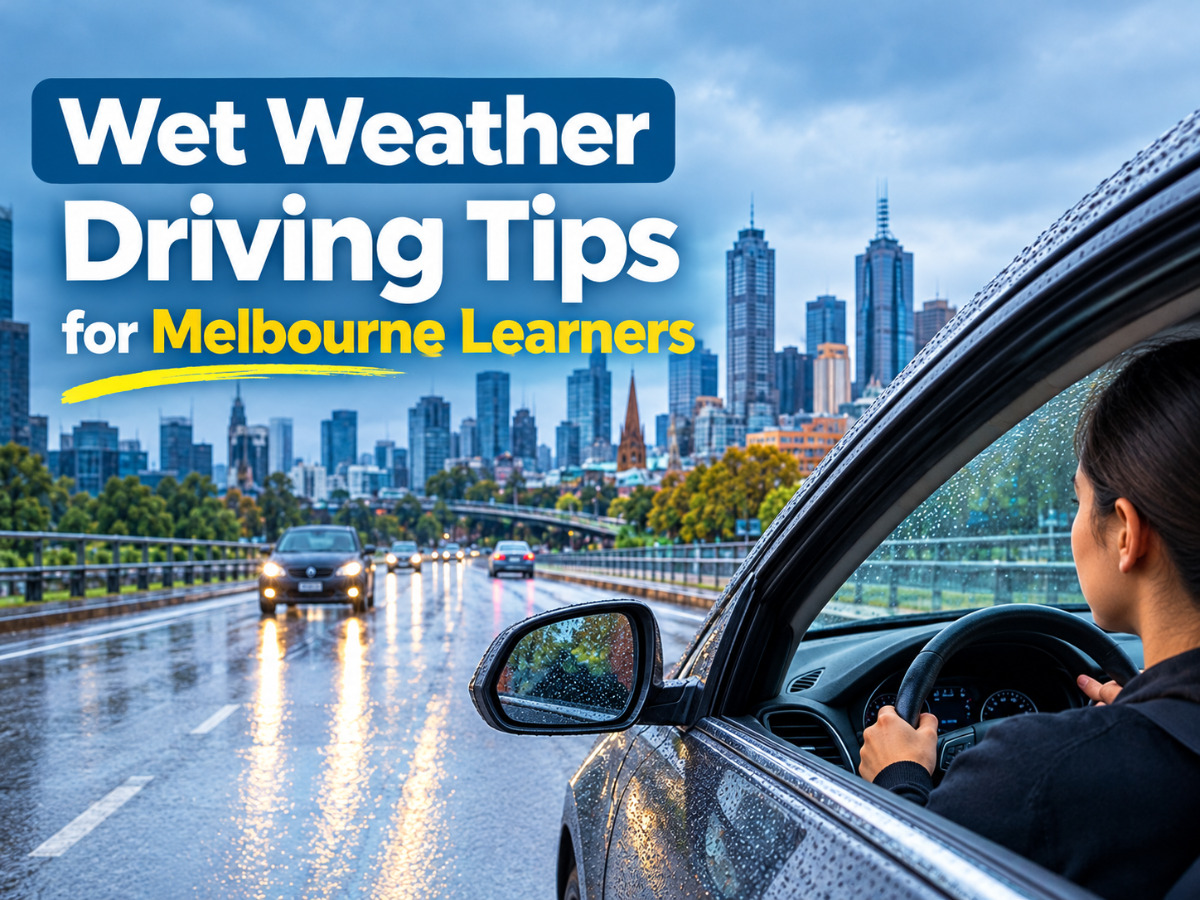
Wet Weather Driving Tips for Melbourne Learners
Melbourne weather doesn’t ask permission. You can start a lesson in sunshine and finish it…

Night Driving Tips for Learners in Melbourne: A Safety Guide
Driving after dark feels like a different skill. Distances are harder to judge, oncoming headlights…

Best VicRoads Testing Locations Near Melbourne’s West (What to Expect)
Choosing the right driving test centre in Melbourne’s west can help you plan your test…